Links
Reference Shelf
Two shelves. The first covers Darklands specifically — the game, its community, and the format-documentation ecosystem. The second covers DOS game reverse engineering more broadly: tools, specifications, and case studies that apply to any 16-bit RE project.
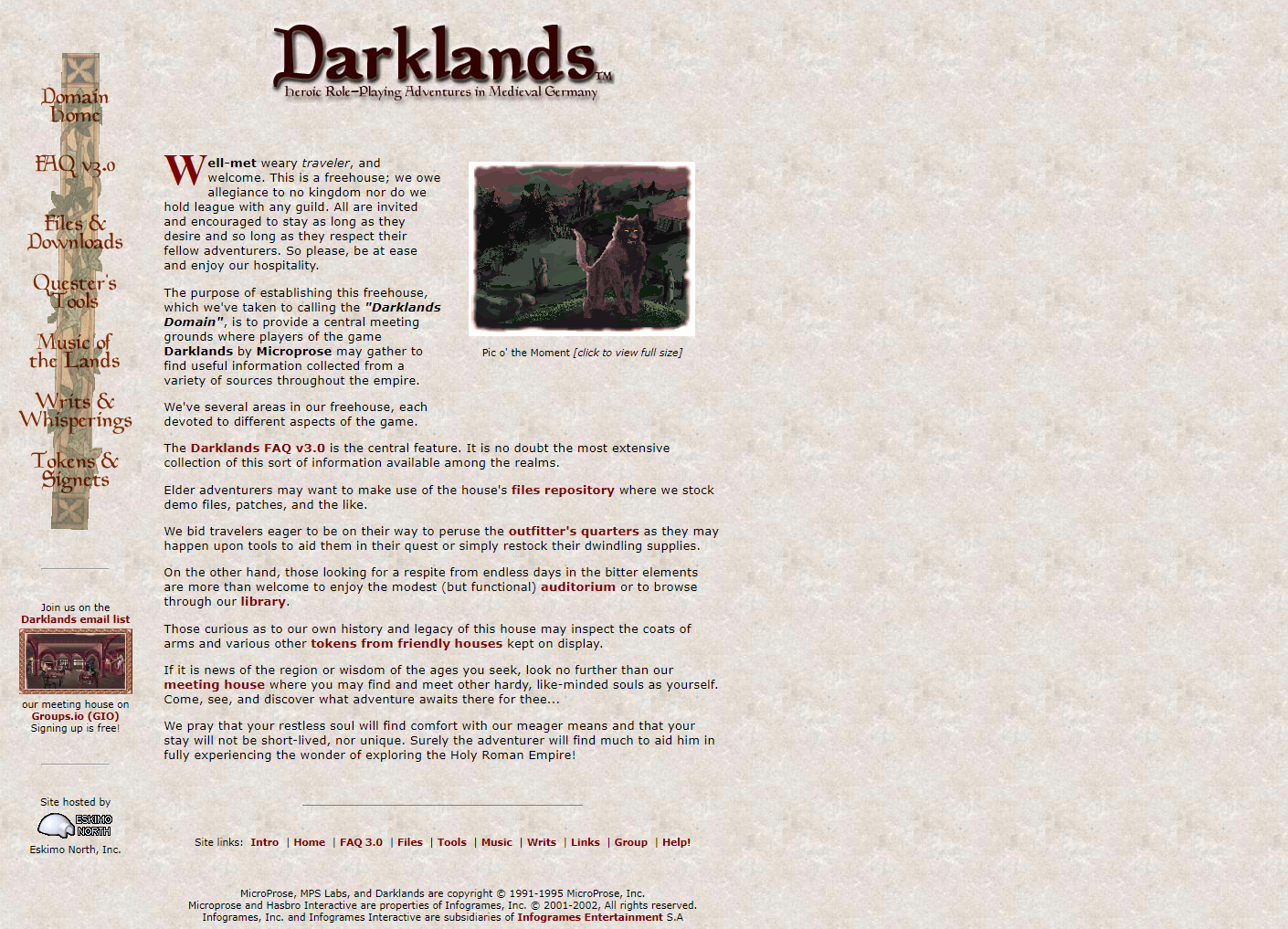
Matt Wirkkala's long-standing reference site for mechanics, skills, items, saints, alchemy, locations, and setting lore.
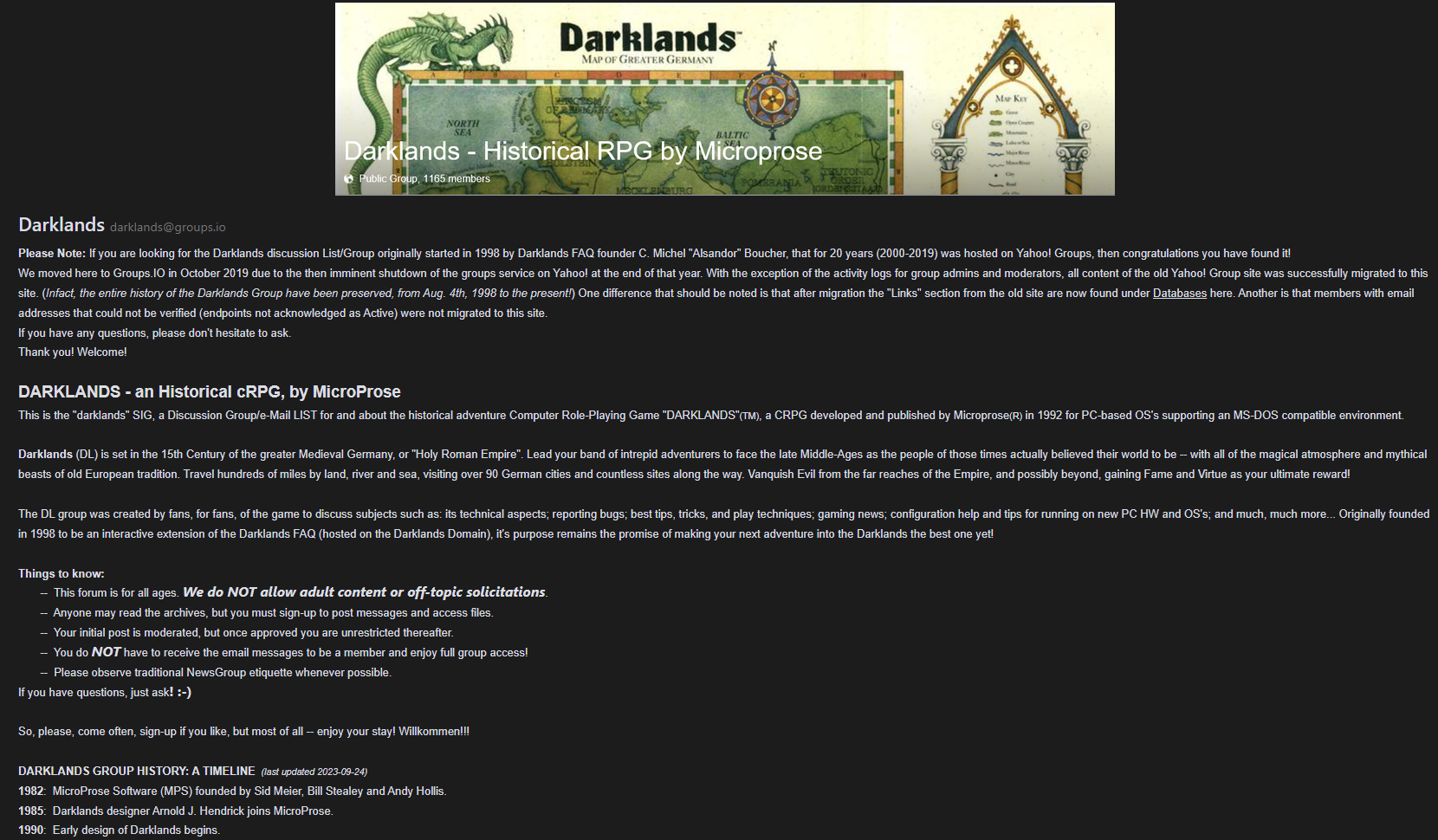
The active mailing list and archive of discussion, discoveries, old Yahoo Group knowledge, modding questions, and technical context.
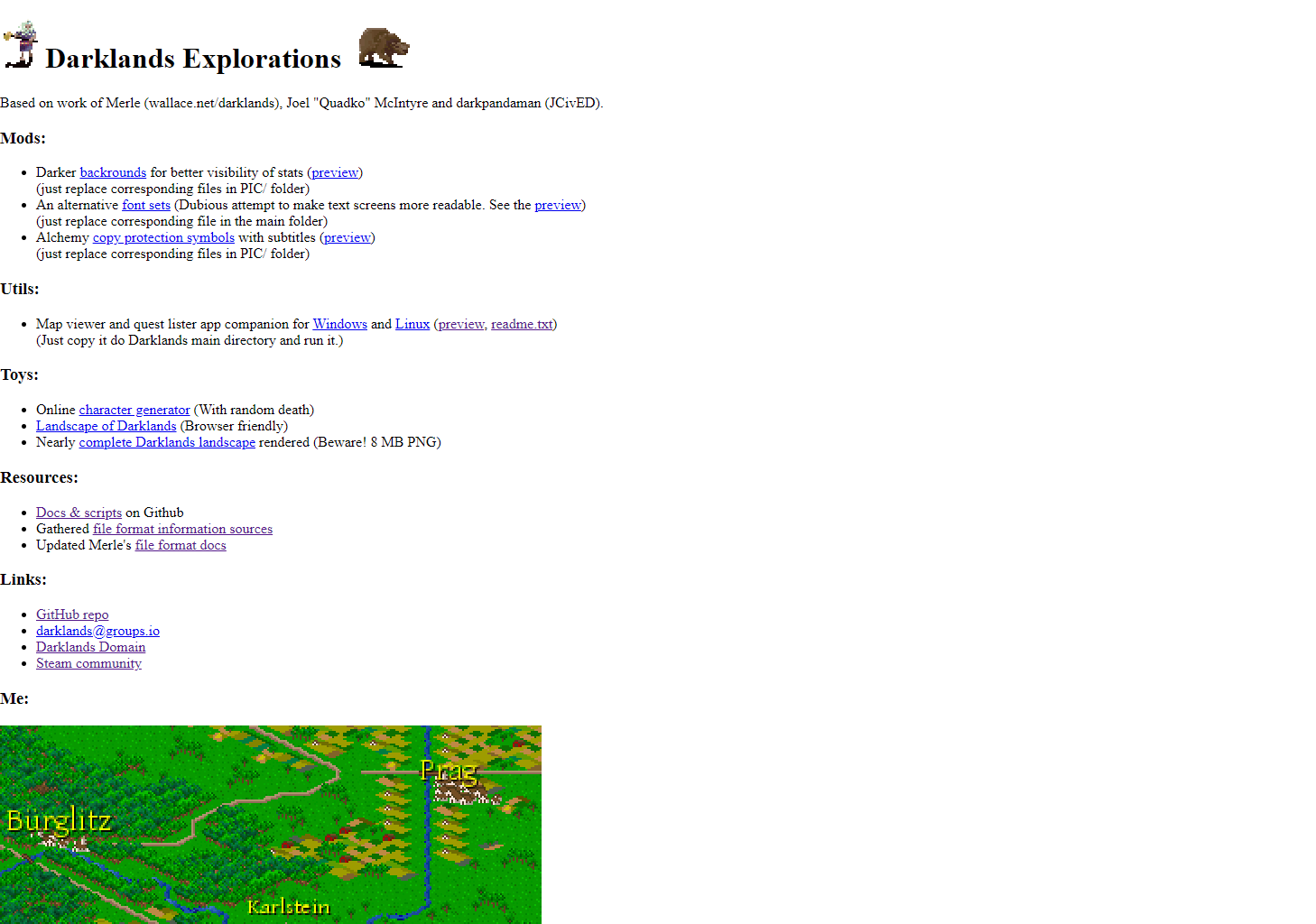
Dedicated Darklands research pages with format notes, tool history, catalog observations, and documentation that still matters today.
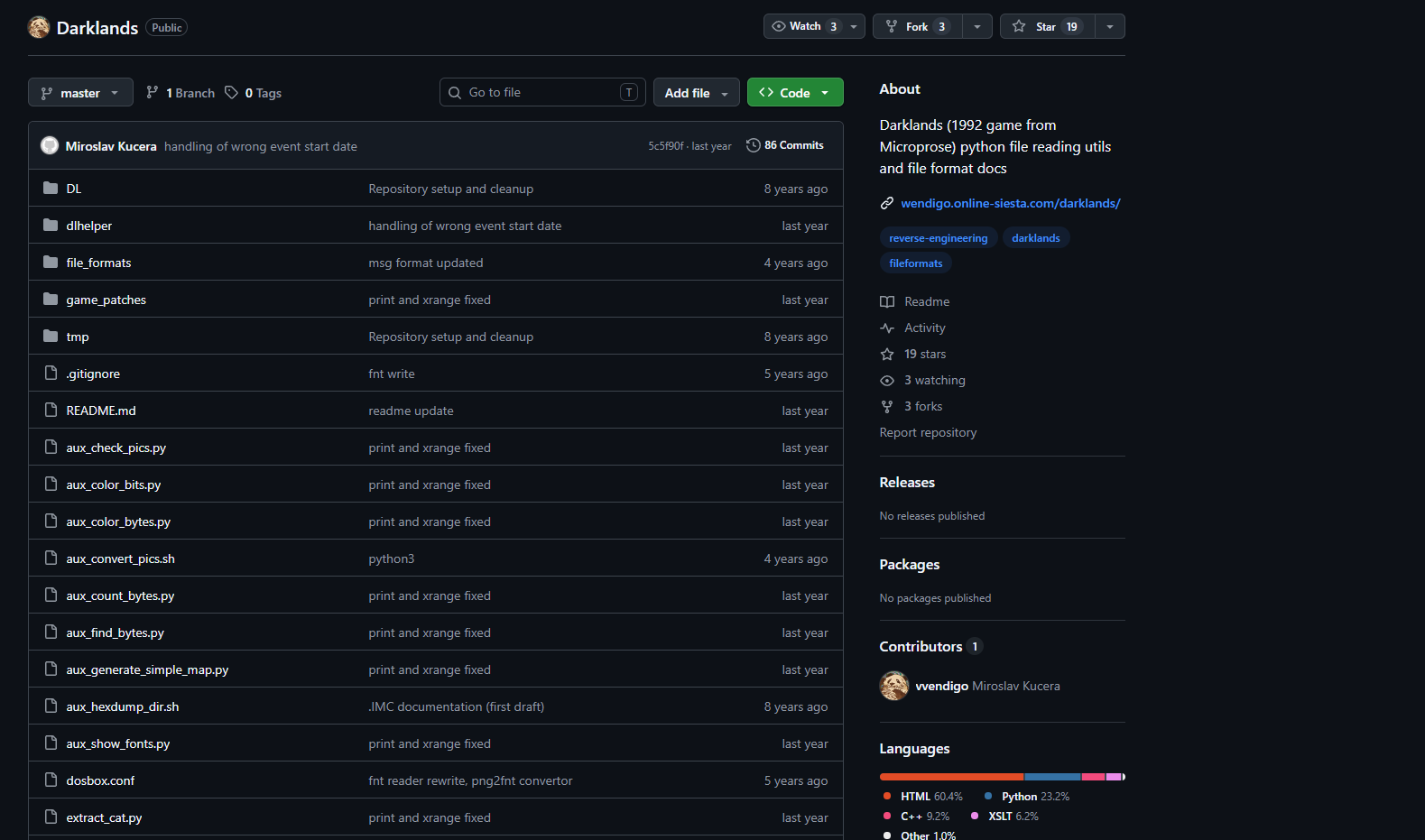
The GitHub home of Wendigo's XML specifications and tools. A foundational source for Darklands readers, editors, and extractors.
The primary structural workbench for focused analysis of original 483.07 code. Its control flow, call sites, and decompilation are checked against the original bytes and an independent Reko review.
DOS emulator and debugger used to observe the original game. The restoration also uses project-specific DOSBox-X patches and Autoprobe for focused runtime capture and comparison.
A C# x86 emulation and reverse-engineering framework that influenced early project research. The active restoration engine is a separate evidence-backed C# rewrite of original code units.
The definitive reference for every DOS and BIOS interrupt: INT 21h file and memory calls, INT 10h video, INT 13h disk, hardware port I/O. Indispensable any time a game touches DOS services or hardware directly.
Free comprehensive reference for 16-bit x86 assembly: segmented memory model, real-mode addressing, calling conventions, and the programming idioms that appear constantly in DOS-era compiled code.
Independent decompilation and data-flow review for focused original-code units. Material differences from Ghidra are resolved against assembly and observed execution before implementation.
Deep annotated RE of Wolfenstein 3D and Doom. The best public examples of DOS game engine analysis at the code level — how to reason about rendering pipelines, memory layouts, and segment-juggling from the assembly up.
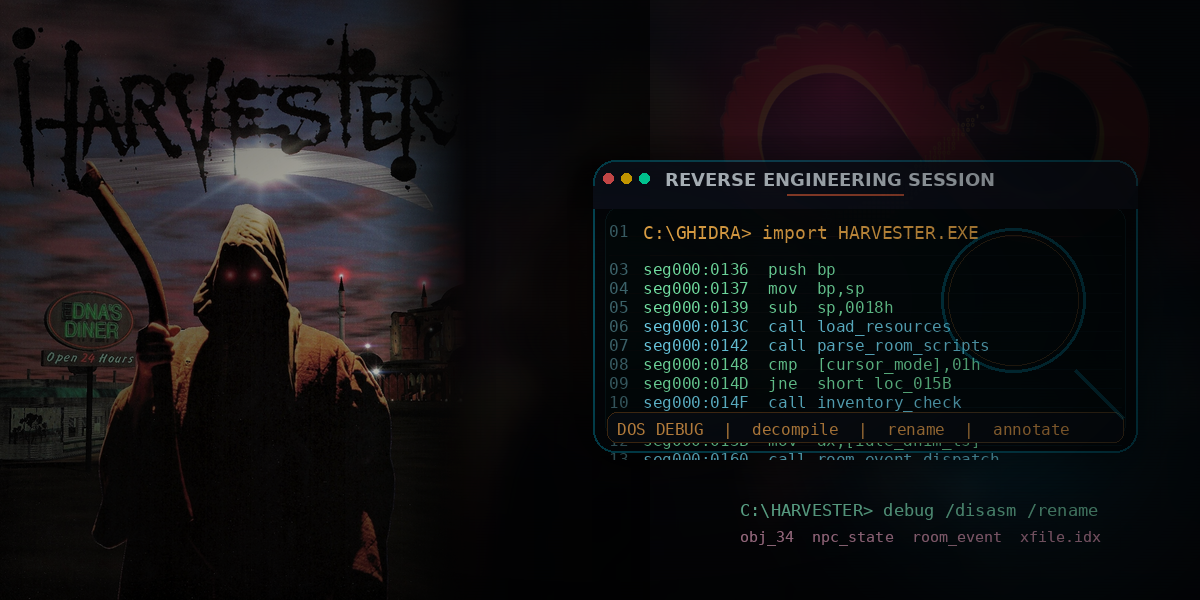
Six-part series on RE'ing the 1996 DOS game Harvester with Ghidra and Codex, targeting a ScummVM reimplementation. The closest public analog to this project in both toolchain and approach.
The active technical community for vintage PC software and hardware. Hardware quirks, Sound Blaster DMA behavior, DOS memory models, timer edge cases — the knowledge that isn't written down anywhere else but needs to be right.