Devlog #063 - More Pixels, the Same Painting
A Darklands message screen is more than text and a list of choices. Beside the MSG card sits a PIC image. These pictures are small, but they carry an enormous part of the atmosphere.
The thing is they were made for a very specific canvas, a 320×200 display, which was ok at the time but today seems a bit outdated.
The original artists composed for that resolution. Shapes are suggested rather than exhaustively described. Faces may be only a few marks. Roofs, trees, reflections and crowds are arranged so that they read clearly through a limited palette and a limited number of pixels. The softness of the paintings is part necessity, part technique but the overall tone is great and gives Darklands much of his identity.
As great as the original images are, our reimplementation is no longer bound to the 320x200 display resolution. It can present the same game logic, the same MSG resources and the same PIC identities on a modern screen. That creates an opportunity — but also a fidelity problem.
Upscaling is not restoration
The easiest solution would be to resize every original picture.
Nearest-neighbour scaling preserves the pixels but turns each one into a large block. Smoothing hides the blocks by blurring the image. More elaborate upscalers can manufacture edges and textures, but they often treat uncertainty as permission to invent. None of those approaches truly restores the picture. They only magnify, soften or reinterpret the 320×200 result.
At the other extreme, we could commission or generate completely new high-resolution scenes. They might be beautiful. They might even be historically convincing. But they would no longer be the pictures that give Darklands its visual identity. A newly designed medieval street is not a restoration of Darklands’ Main Street merely because both contain timbered houses.
The aim, therefore, is narrower and more demanding:
Restore the original painting rather than replace it.
The original PIC remains the authority for composition, viewpoint, proportions, architecture, figures, props, palette, lighting and mood. Higher resolution should recover the detail that the scene implies, not redesign the scene around detail that was never there. The result should still feel painted rather than photographic, and it should retain the soft watercolor character that makes the original art so distinctive.
This is not an attempt to make Darklands look like a modern game inspired by Darklands. It is an attempt to imagine how the same picture might have looked if its artists had been given a much larger canvas.
The original art must remain canonical
A faithful reimplementation must always be able to display the shipped PIC exactly as the original game did. The high-resolution work belongs in a separate, optional presentation layer.
That distinction is important. The MSG owner still requests the same named picture. The reconstructed gameplay does not know or care whether the frontend shows the 320×200 source or a restored counterpart. A visual setting can choose the original asset, while a high-resolution setting can select the restored version. When no restored version exists, the renderer can fall back to the original automatically.
In other words, higher-resolution art does not replace evidence. It sits above the faithful asset path, remains reversible, and can be reviewed picture by picture.
Introducing seasonal variations
A higher-resolution asset system also makes another old ambition practical: seasonal scenery.
The original developers and artists wanted the world to reflect the seasons, but a complete set of alternate paintings would have multiplied both the art workload and the amount of data that had to fit on early-1990s storage media. Even one additional version of every city picture would have been expensive; several versions would have been difficult to justify within the production schedule and disk budget.
The reconstructed game does not have those restrictions. A restored visual layer can use the internal calendar state to select a corresponding scene:
spring / summer  → warm-season restoration
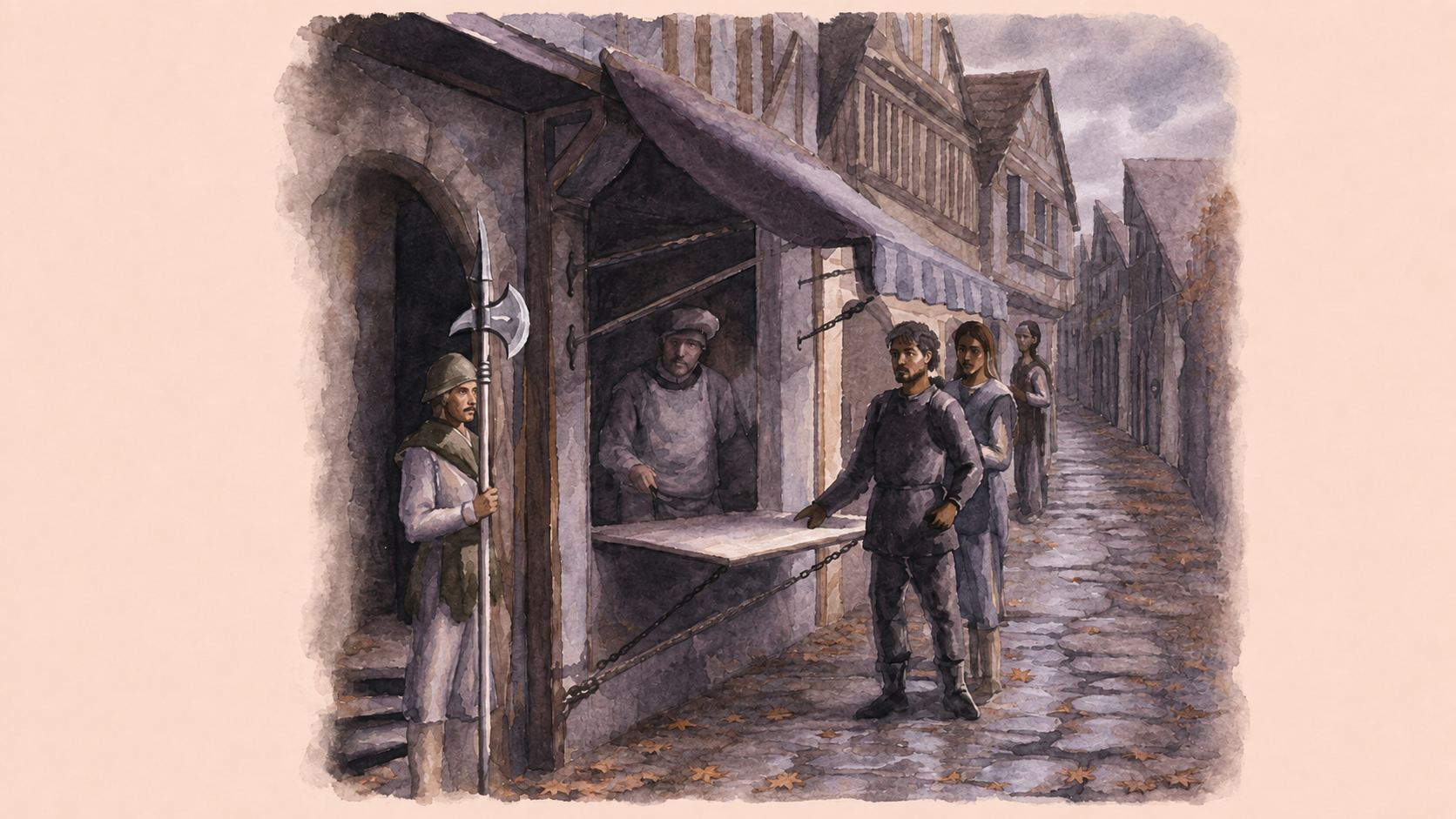
autumn           → autumn restoration
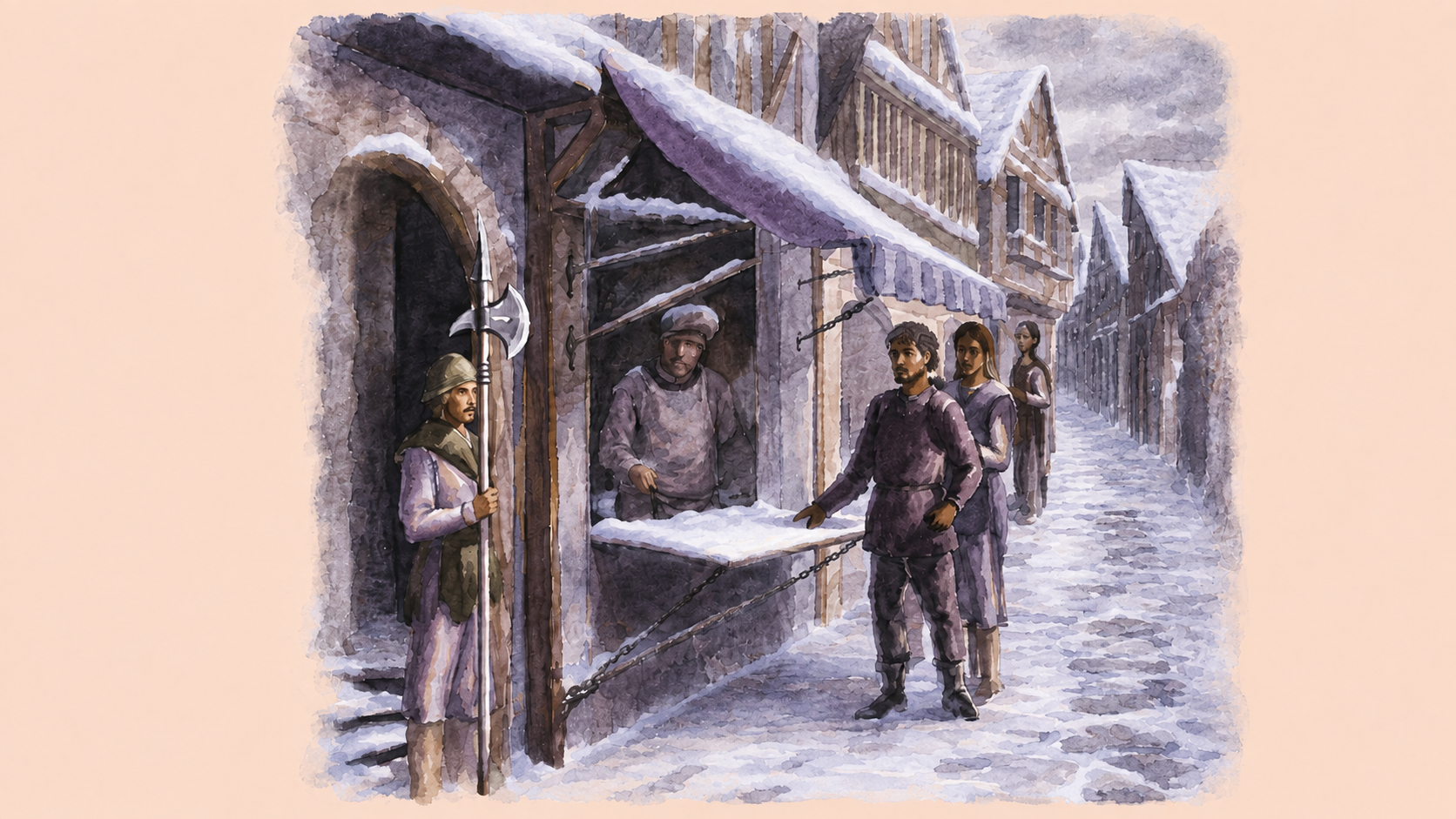
winter           → winter restoration
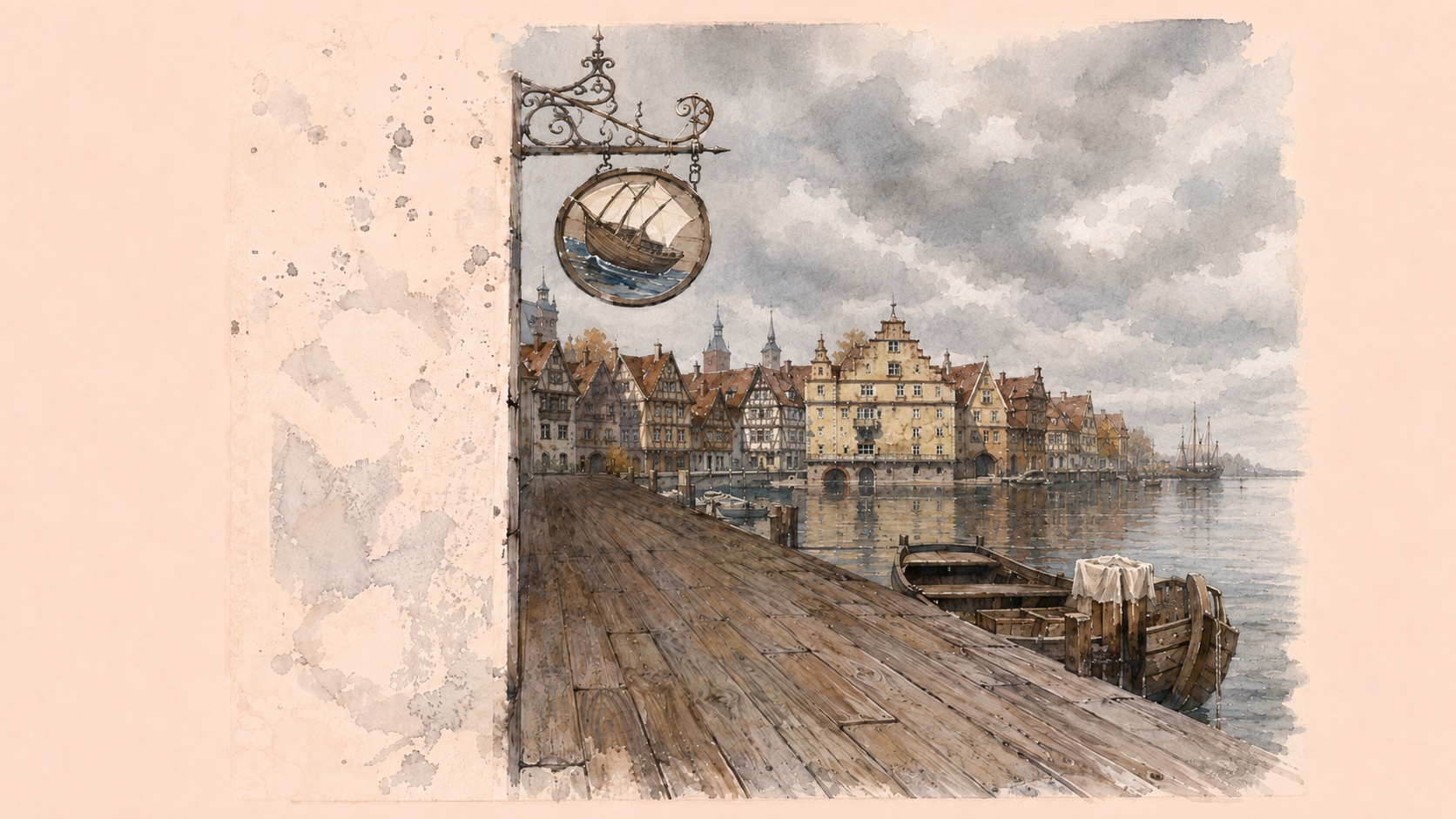
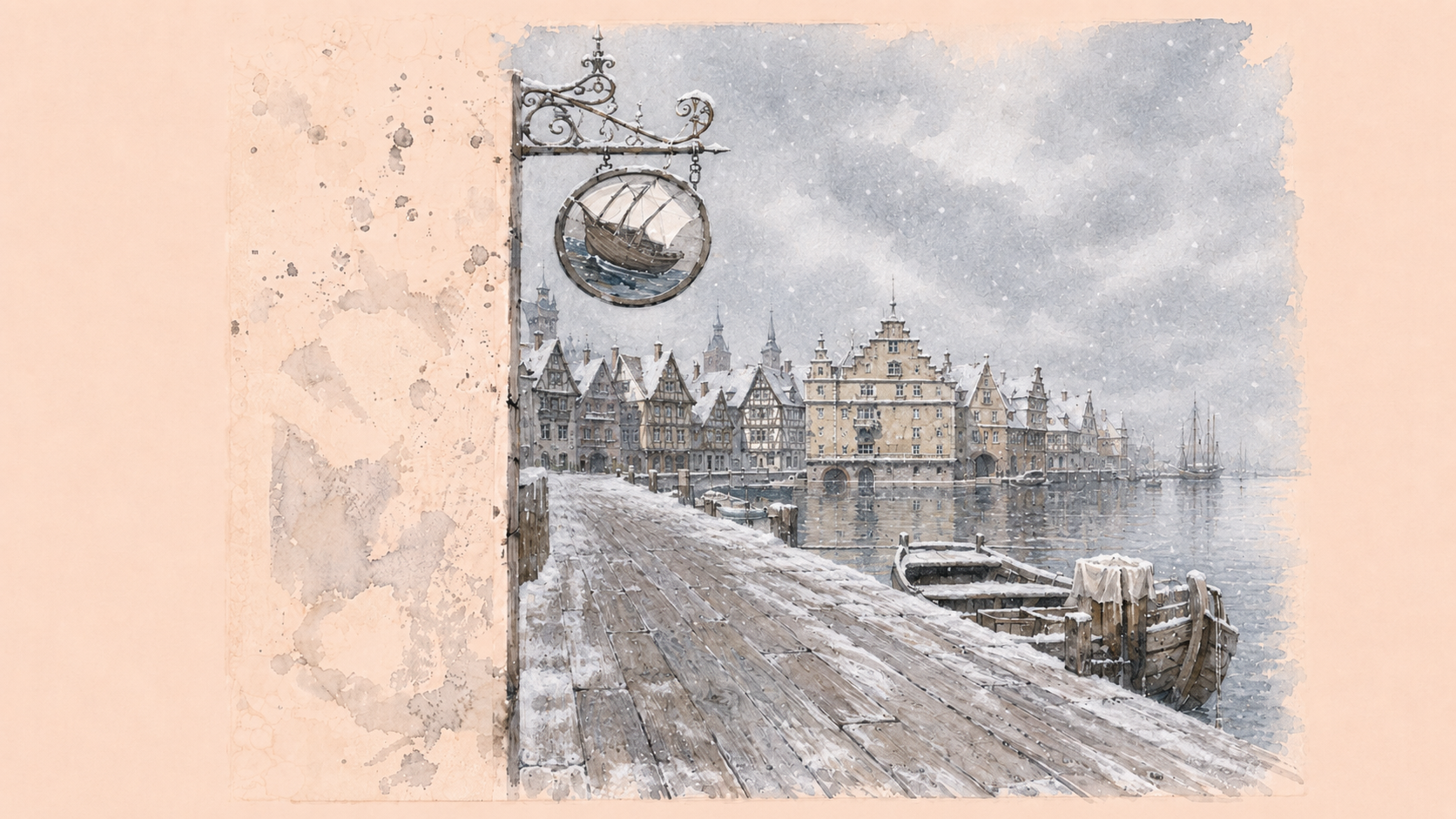
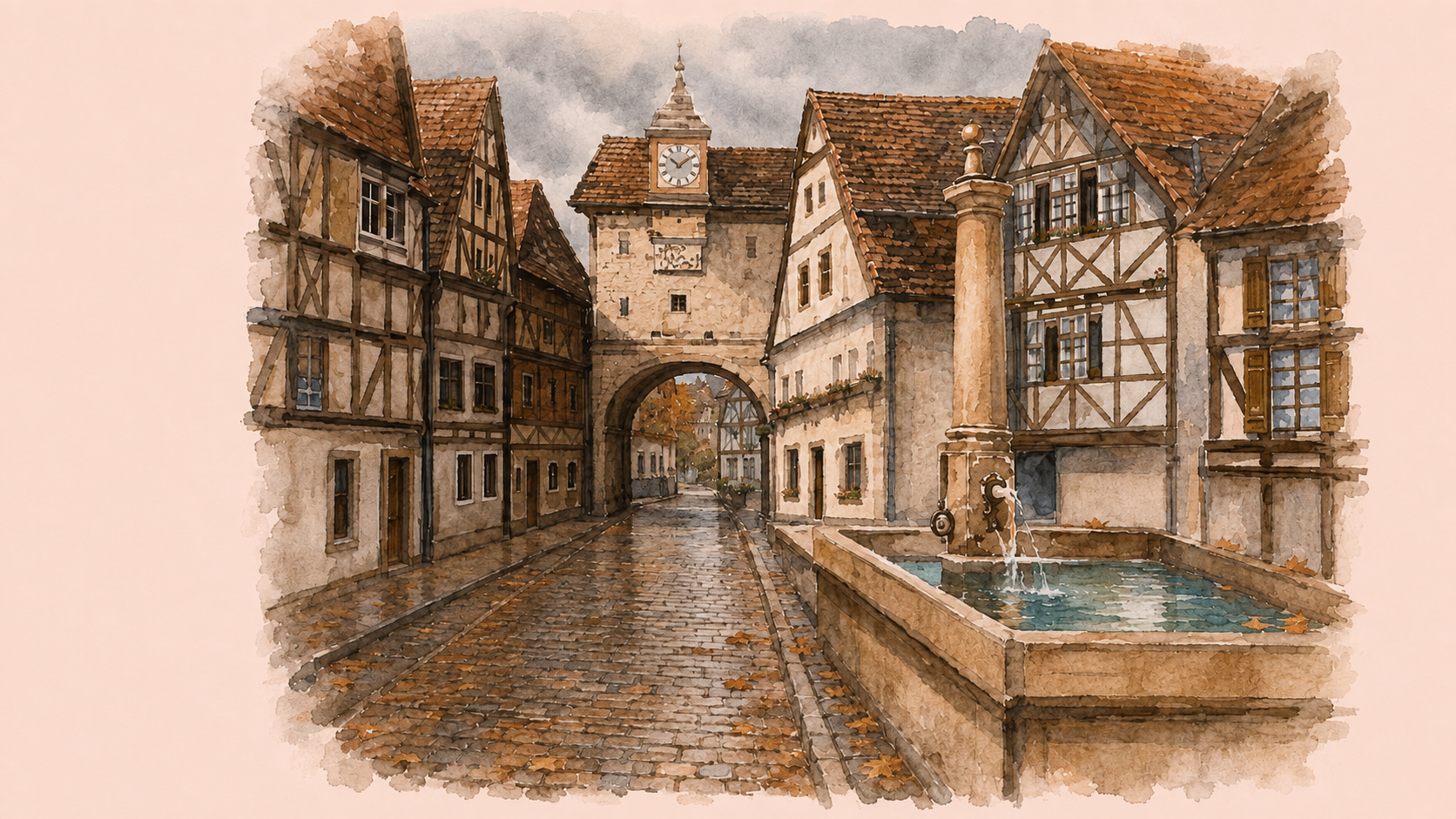
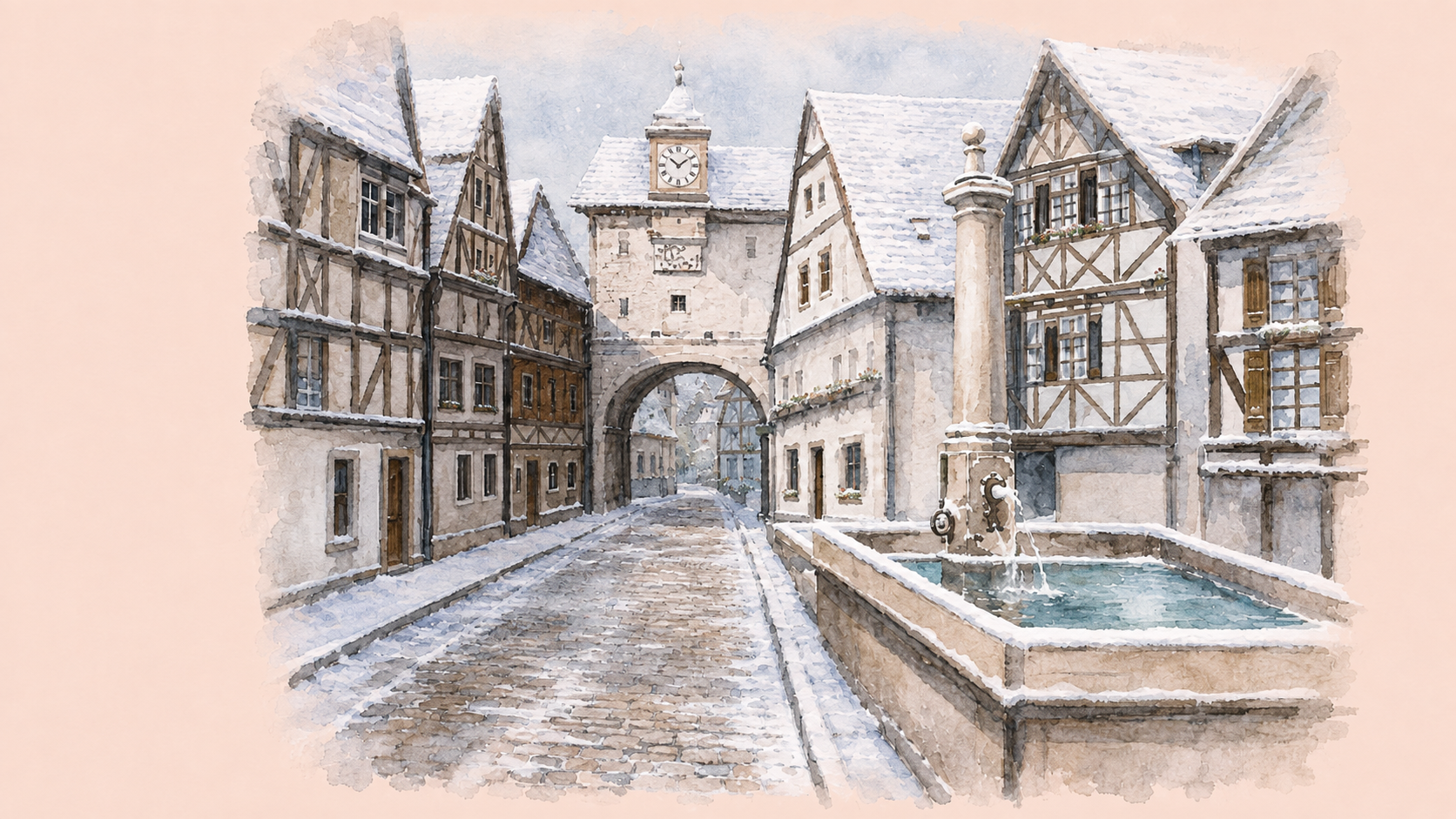
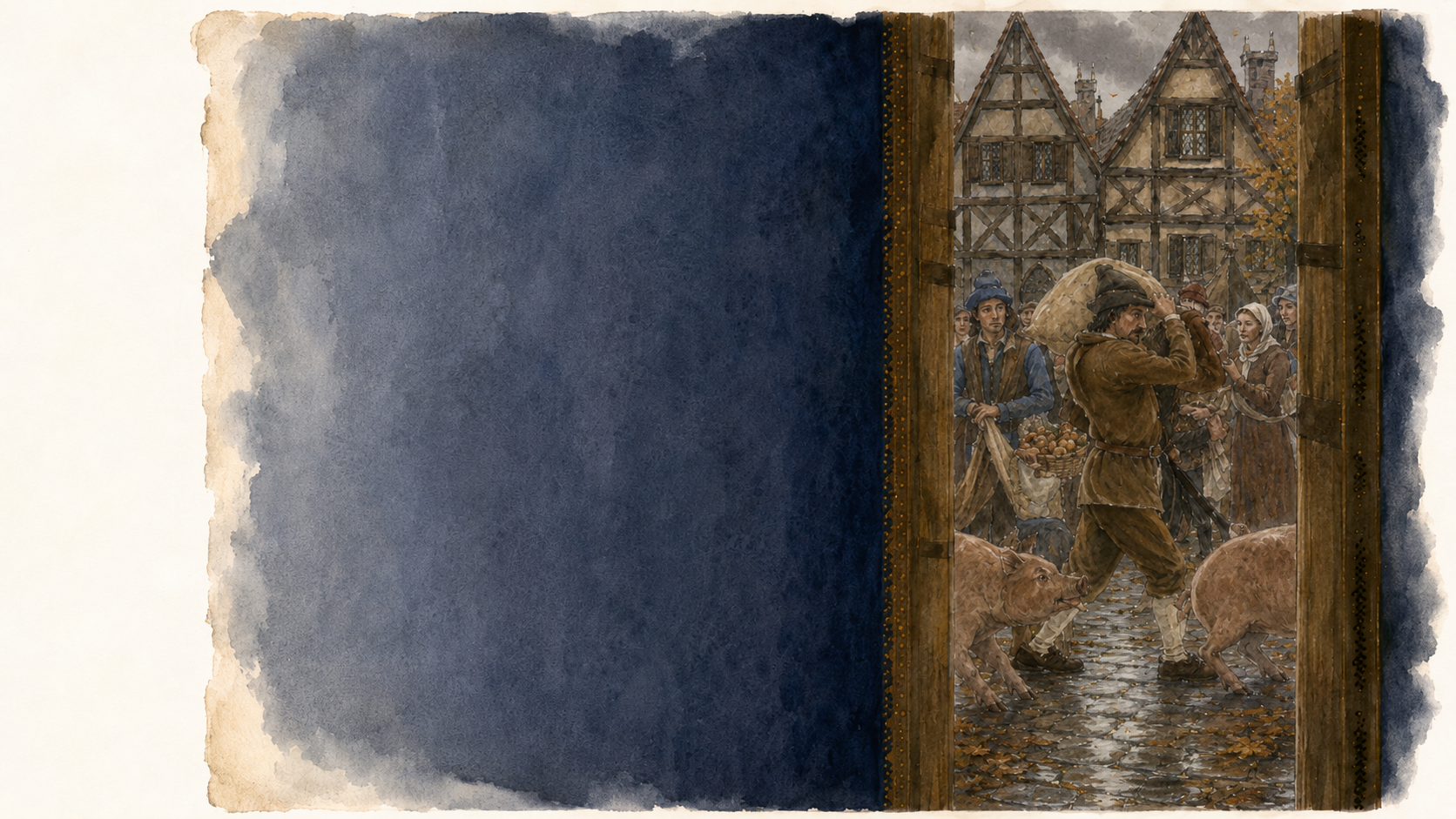
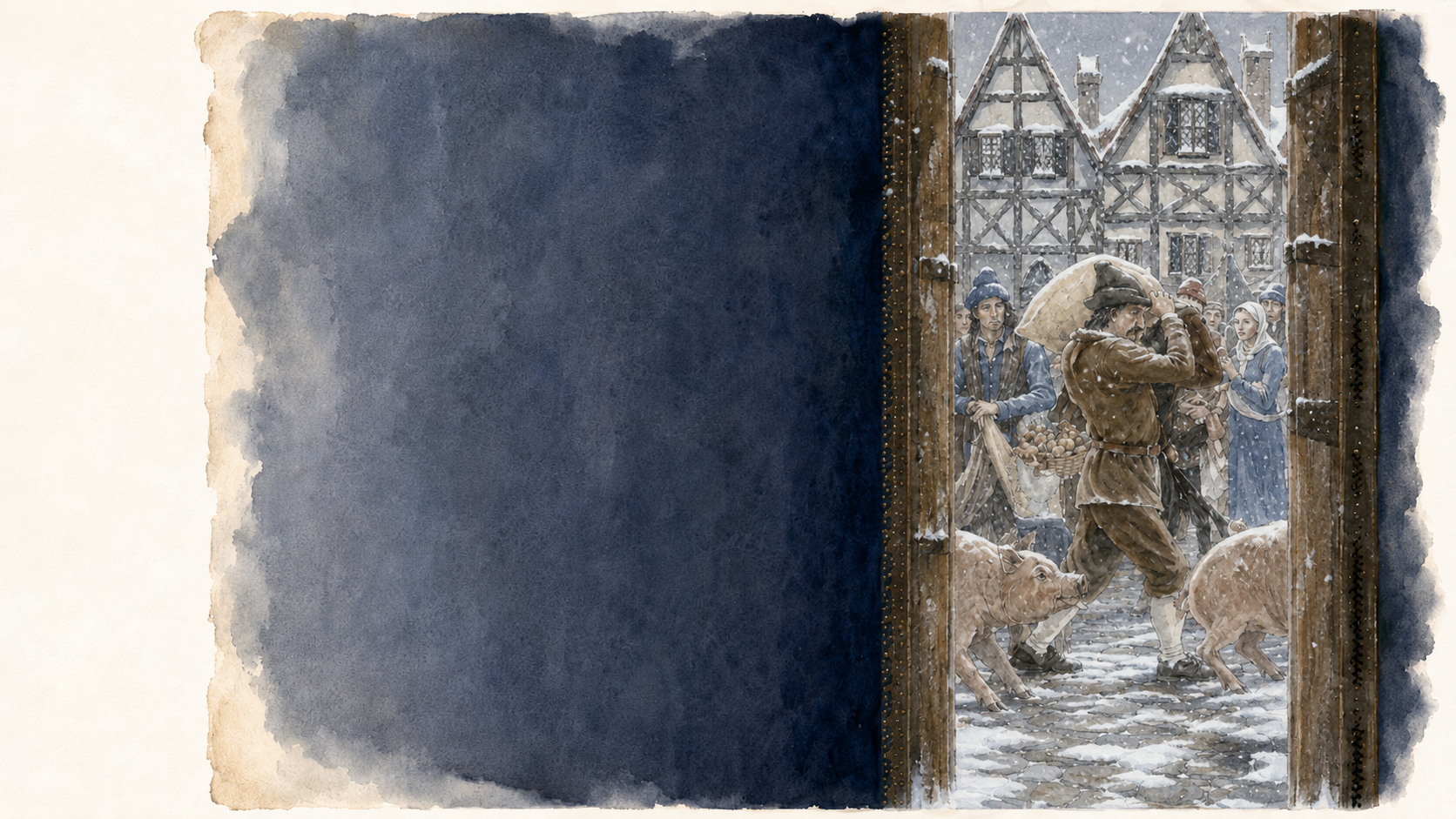
This should not be a colour filter. Autumn is not merely a browner summer, and winter is not the same image with white painted over the ground. Foliage, branches, cloud cover, reflections, snow, visibility and the quality of the light all need scene-aware treatment. At the same time, seasonal variation must not disturb the underlying composition. The player should always recognize the same place and the same original PIC.
For these first prototypes, spring and summer share one warm-season version. Autumn and winter receive separate interpretations.
Reading the Prototype Sets
Each row below contains four images:
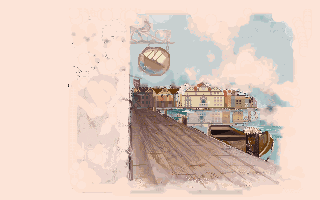
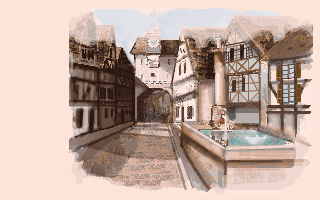
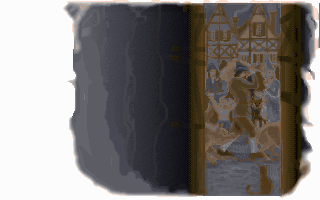
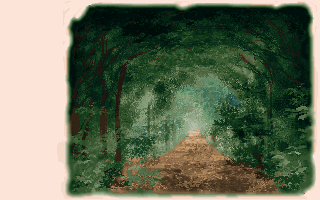
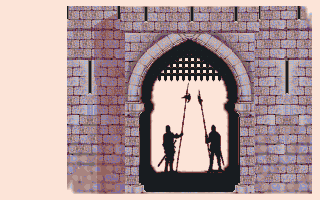
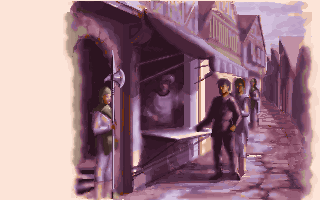
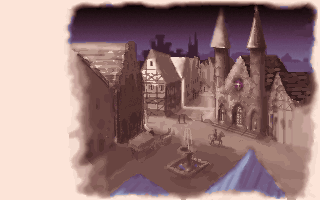
- the original 320×200 PIC;
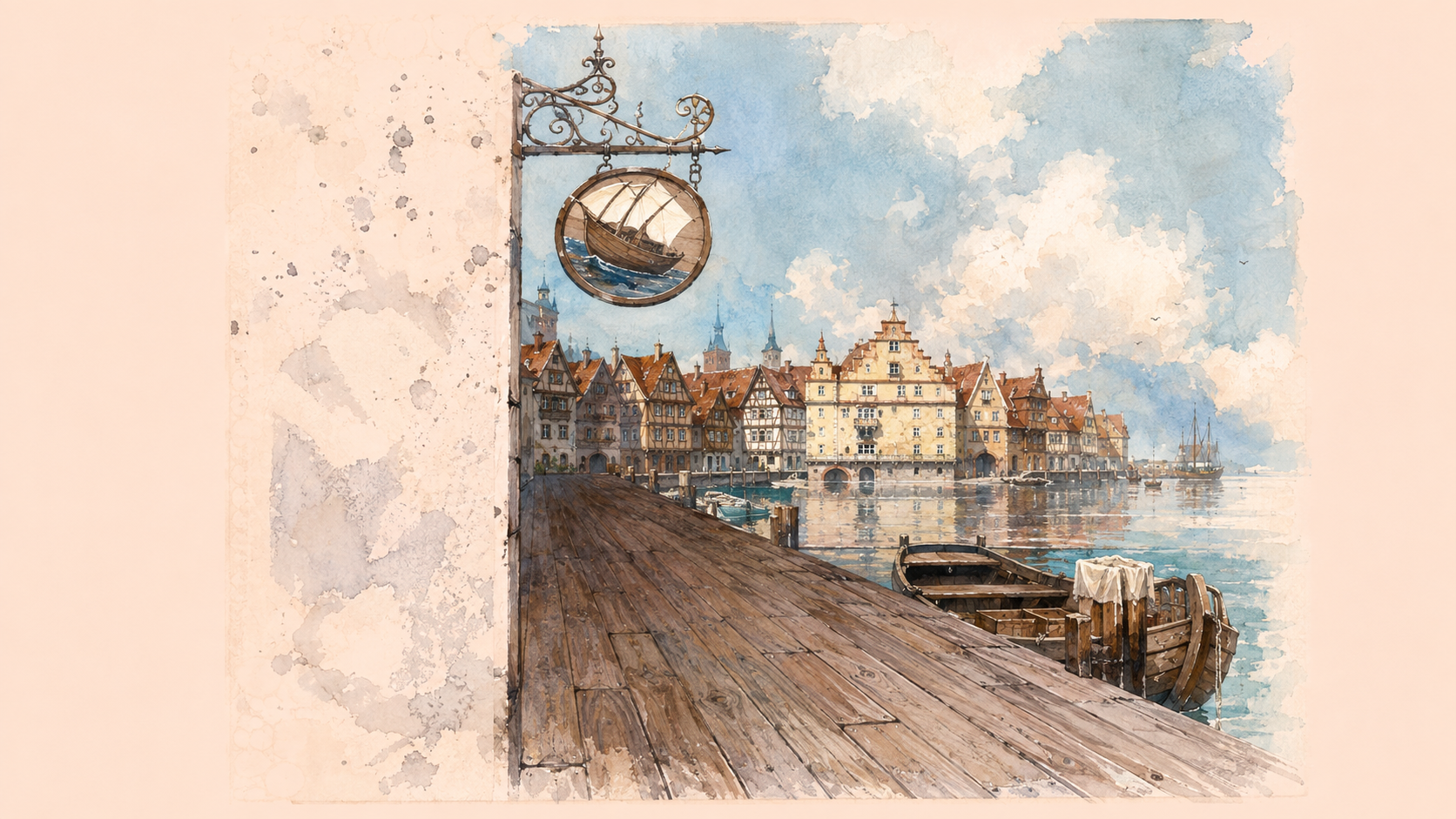
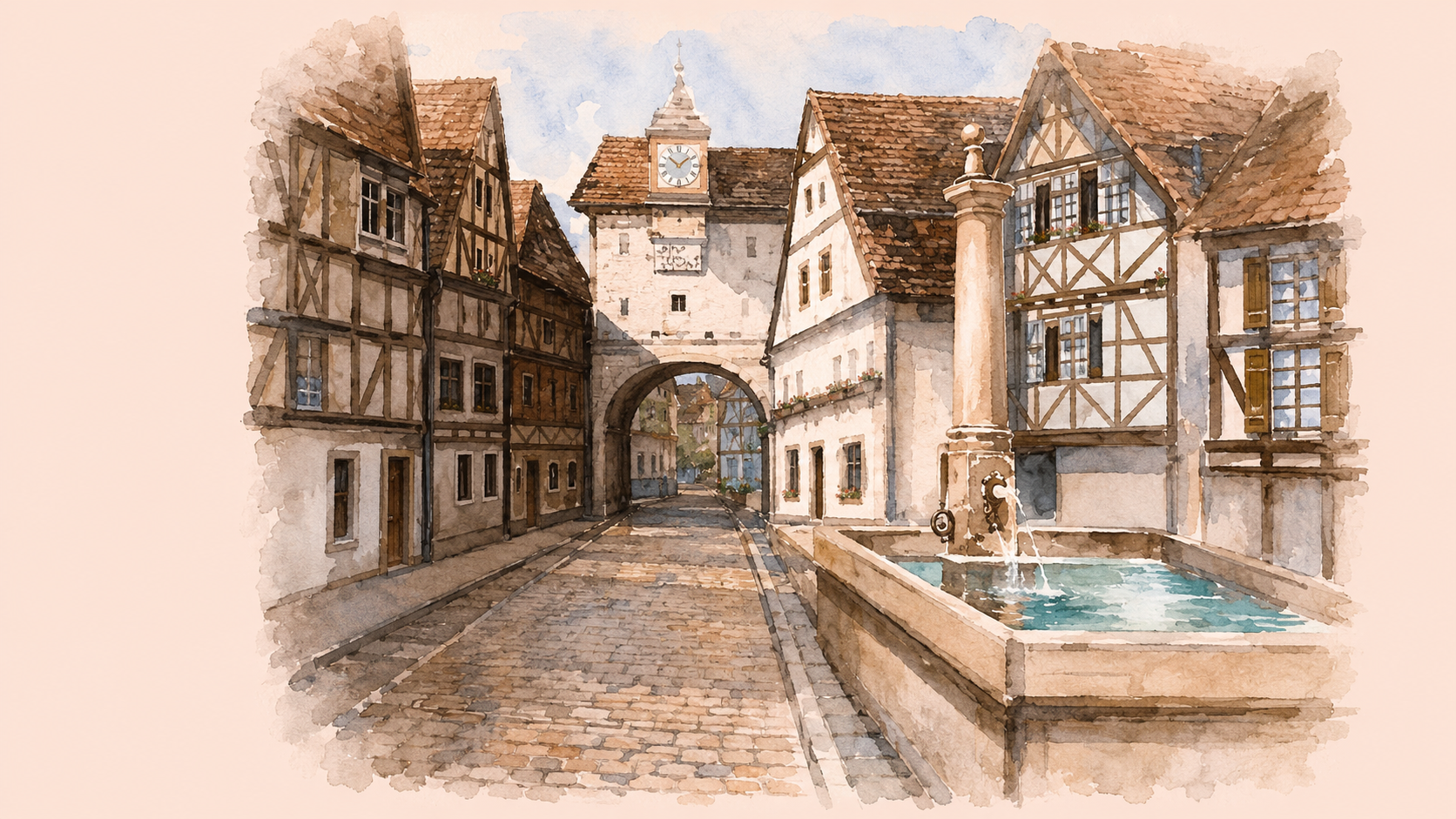
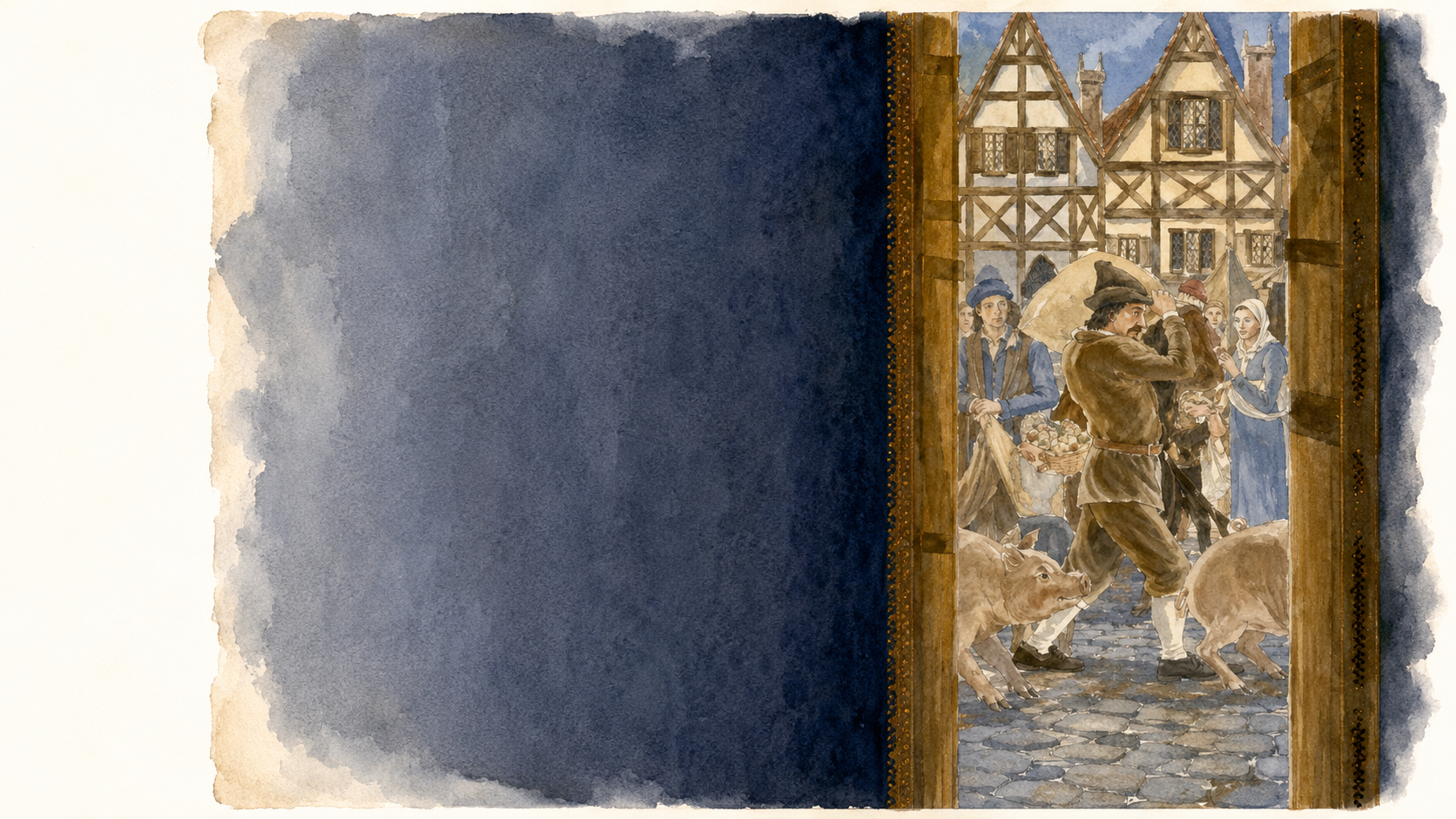
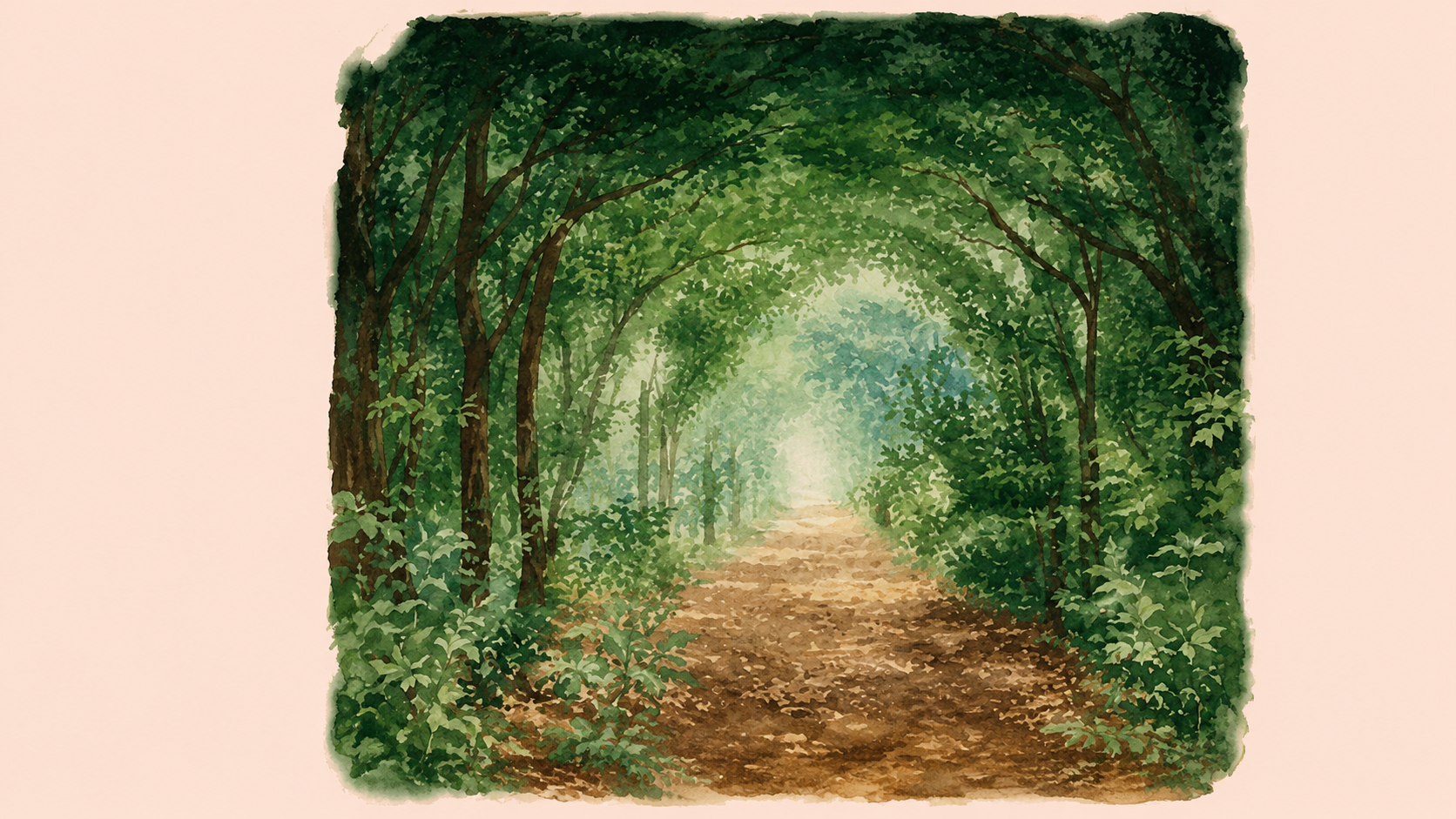
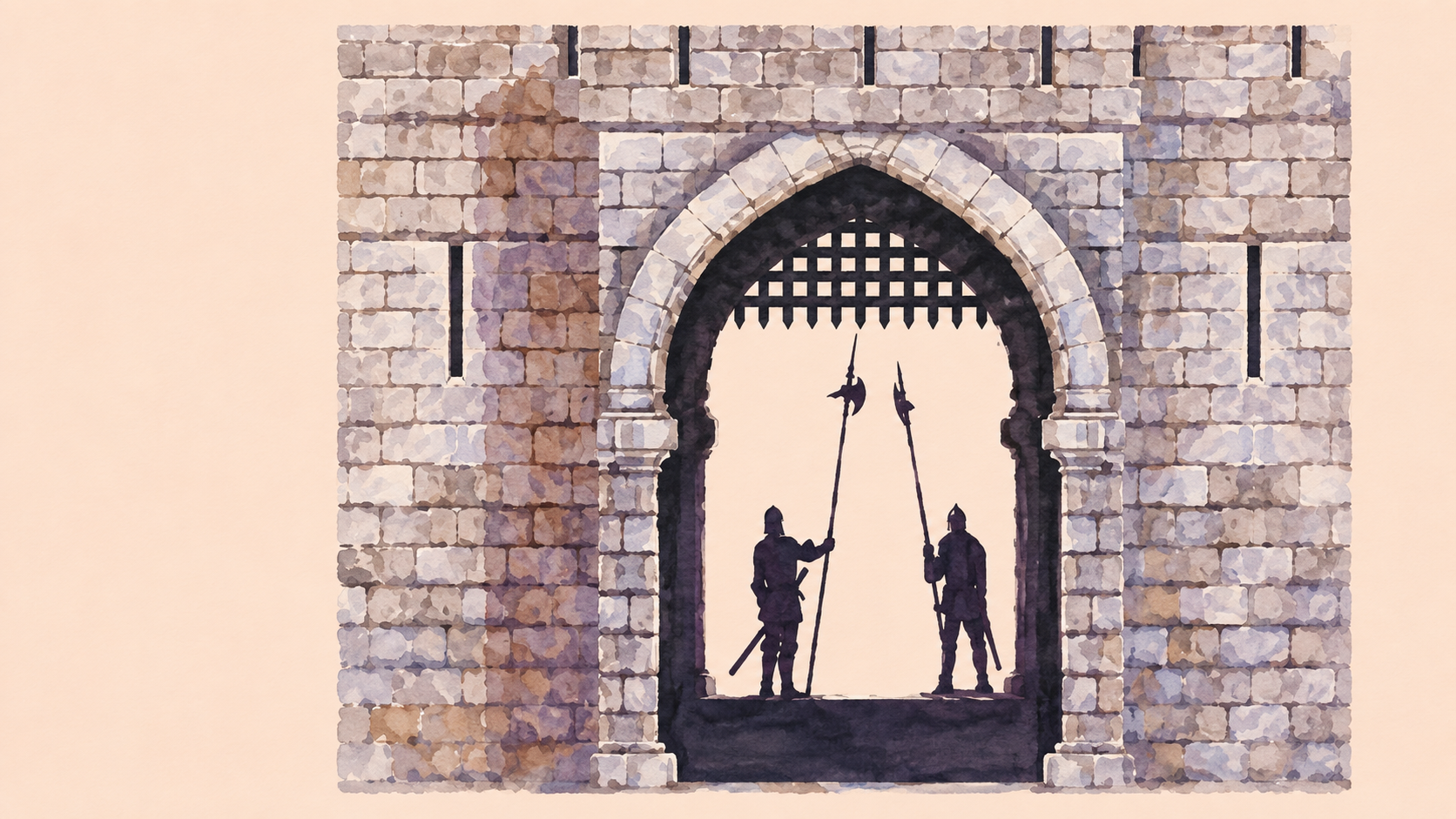
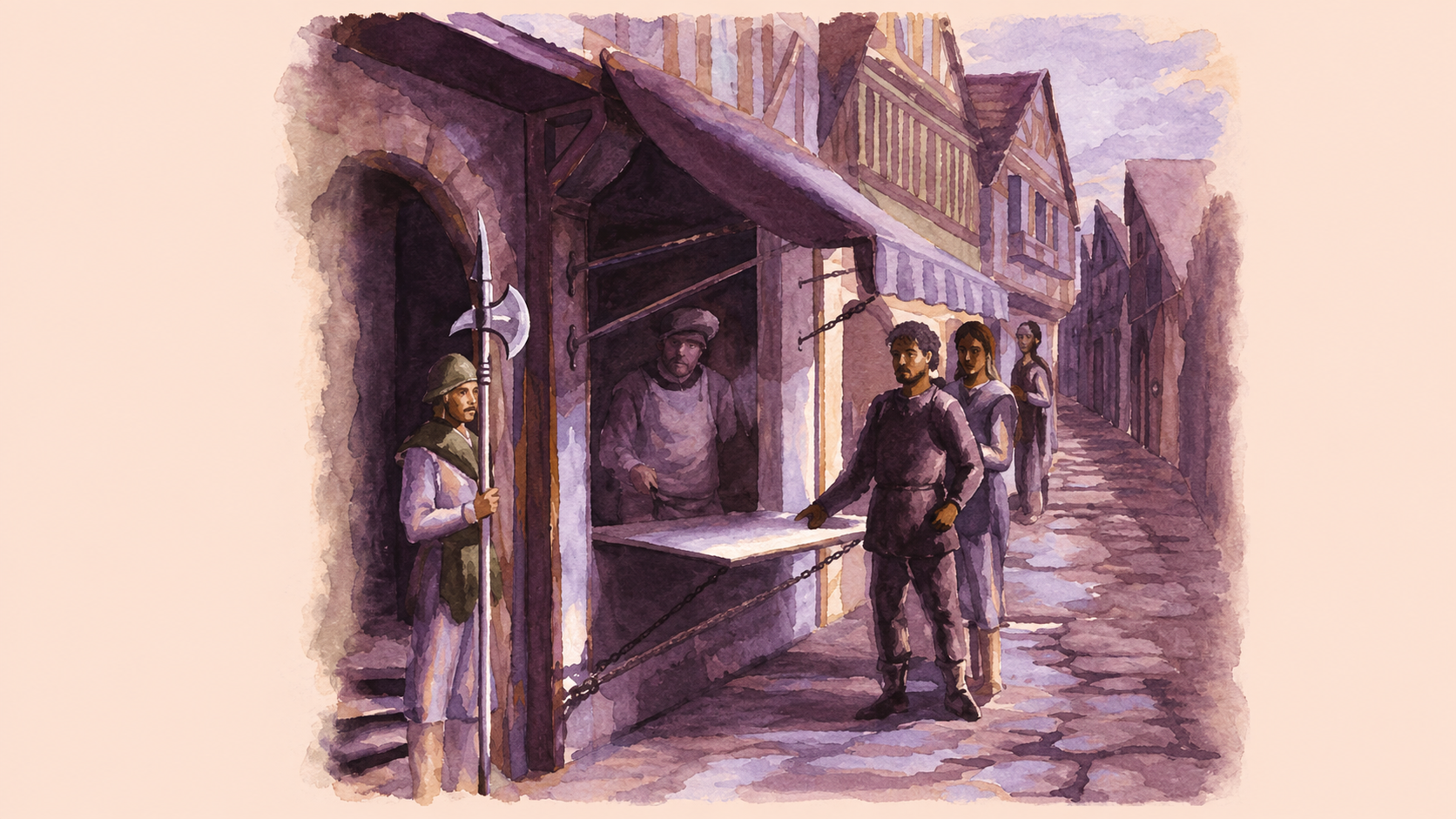
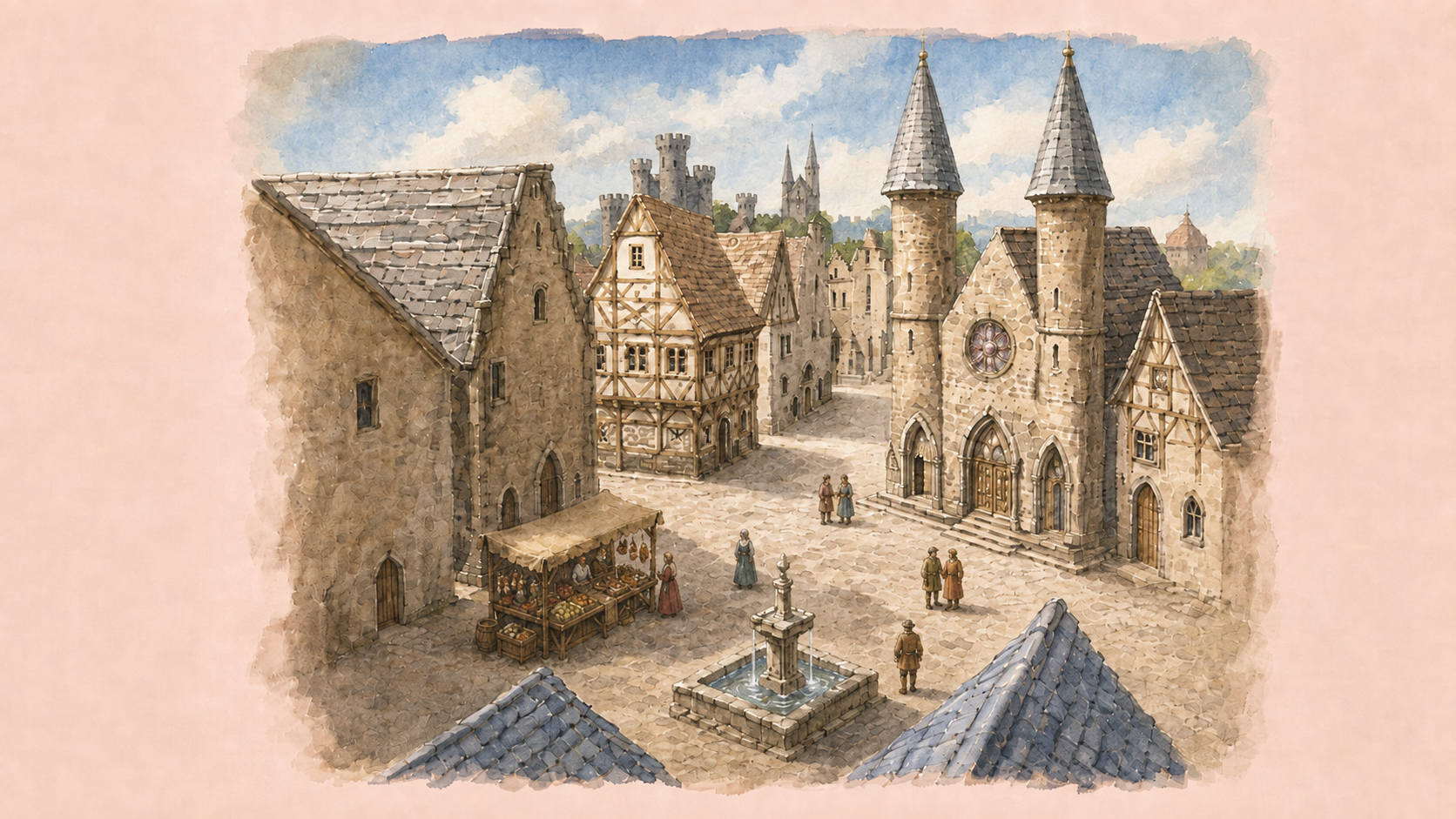
- the restored spring/summer prototype - which is the original restored as is.
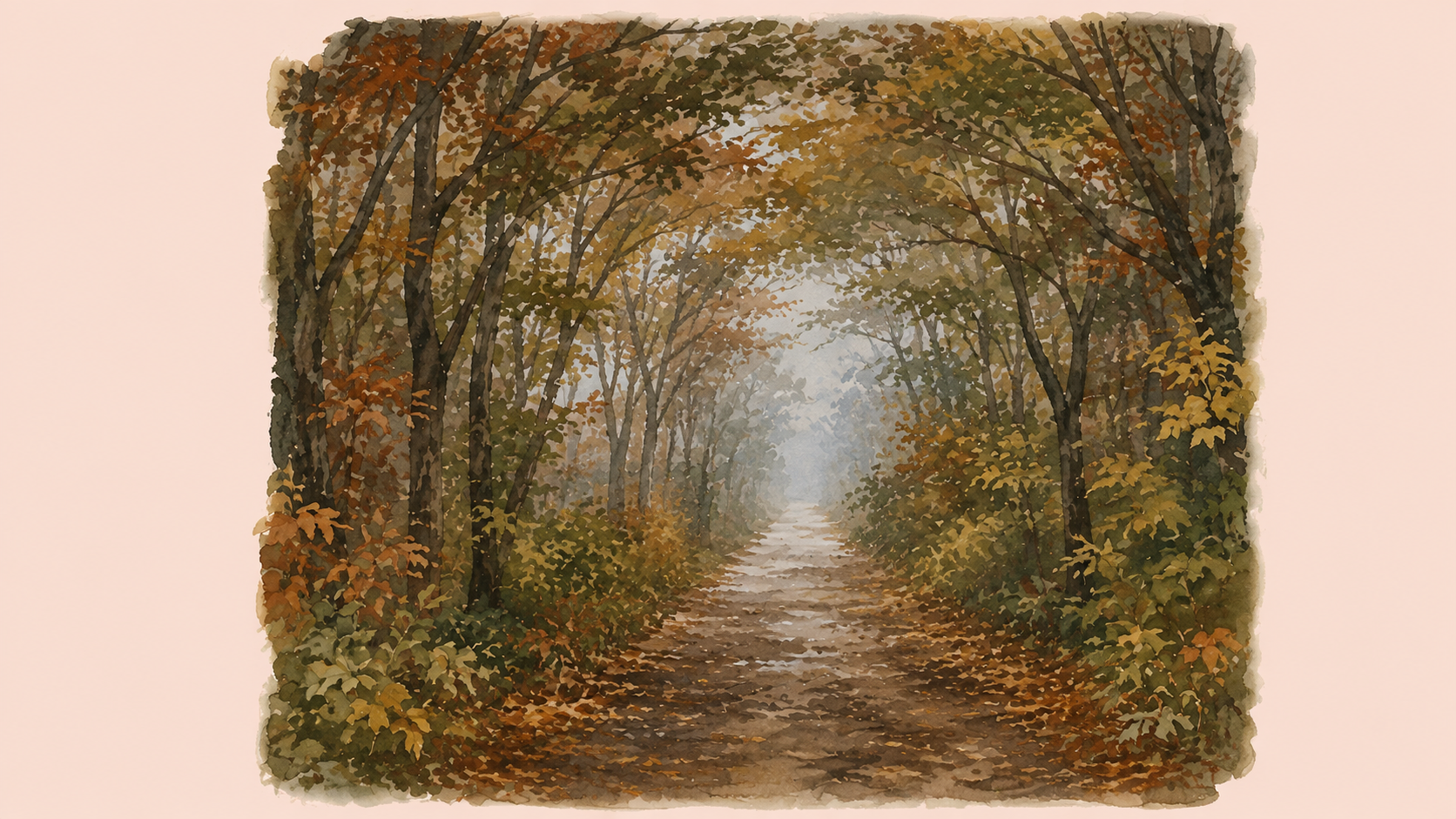
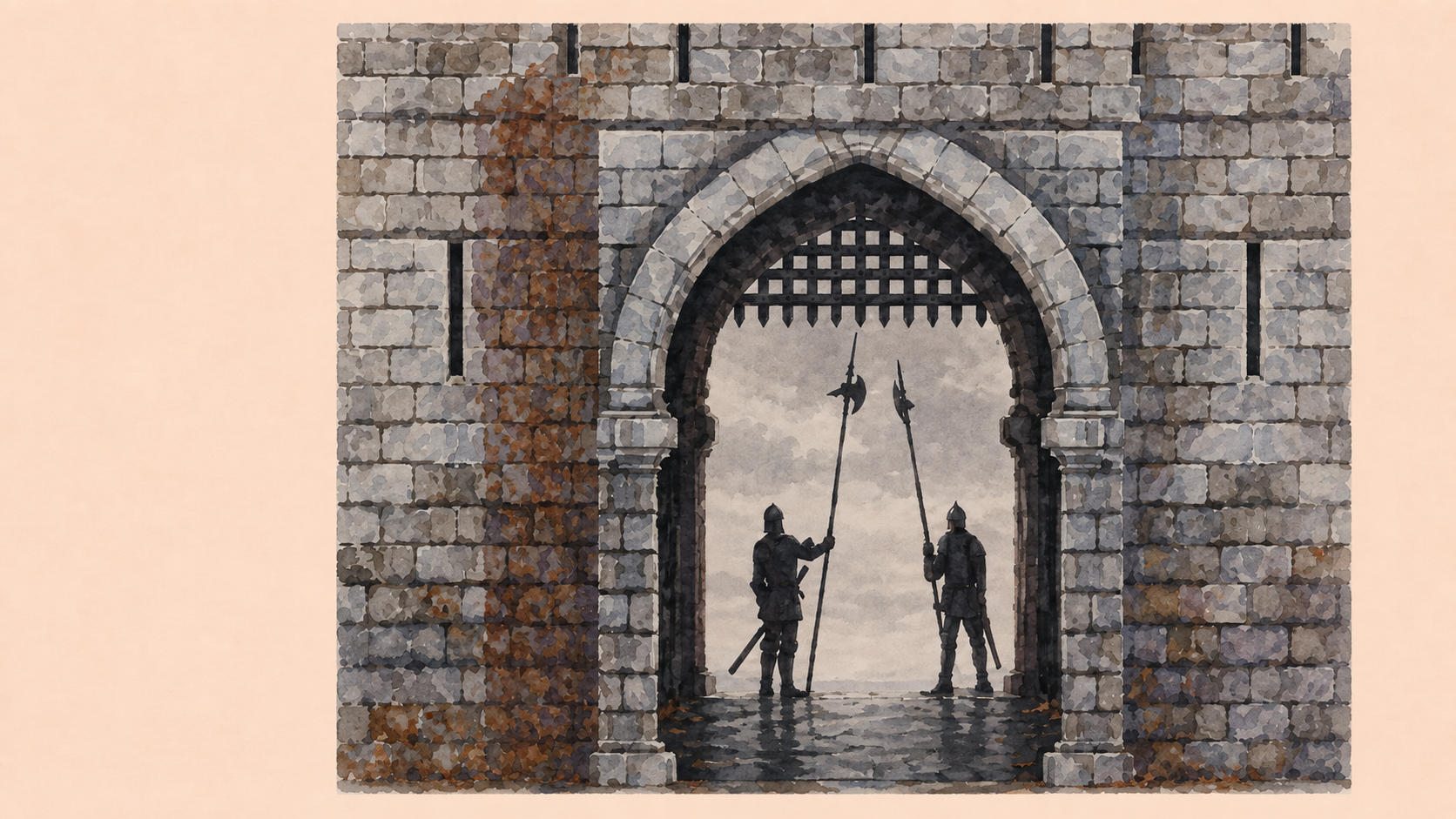
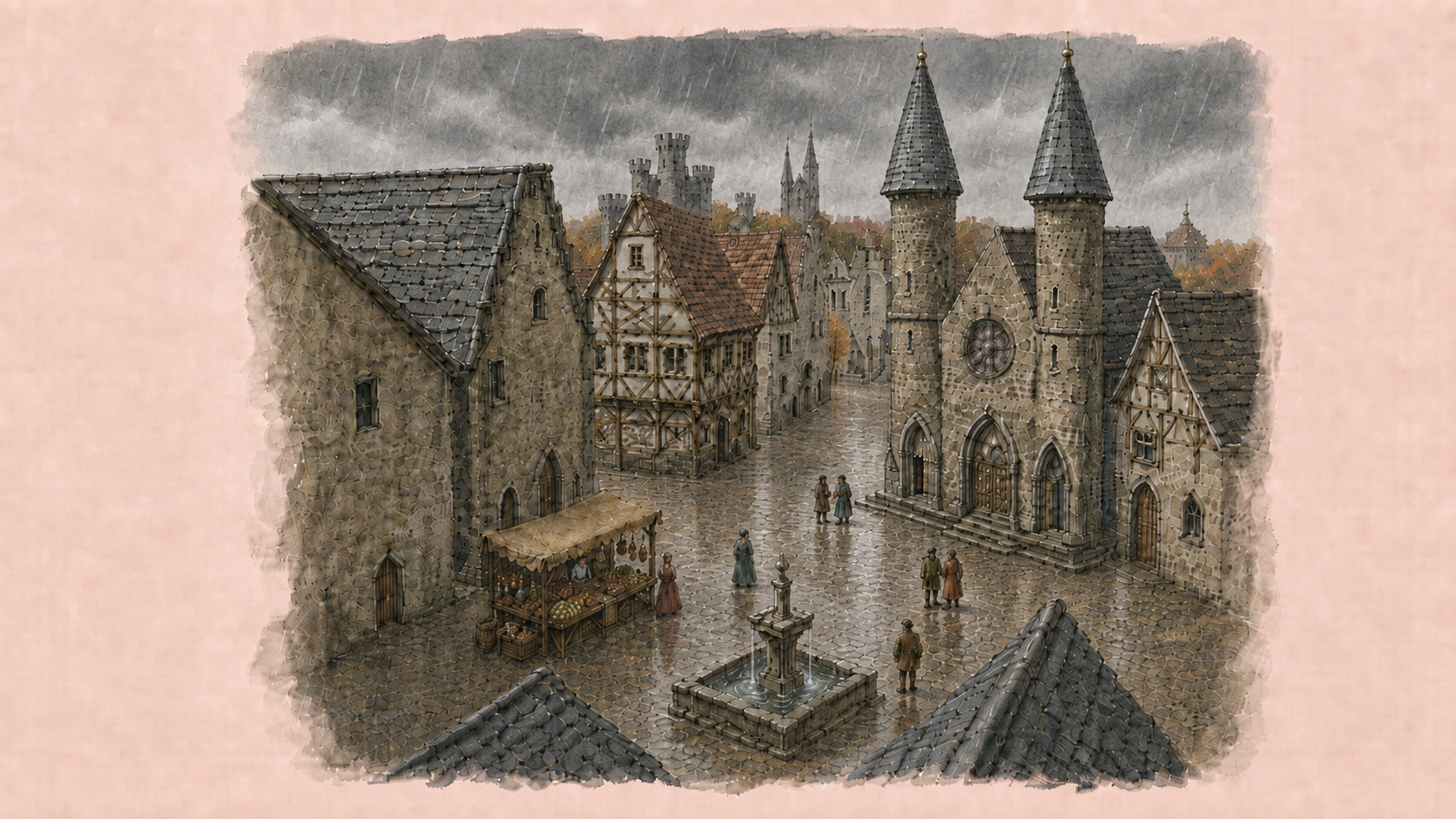
- the restored autumn prototype;
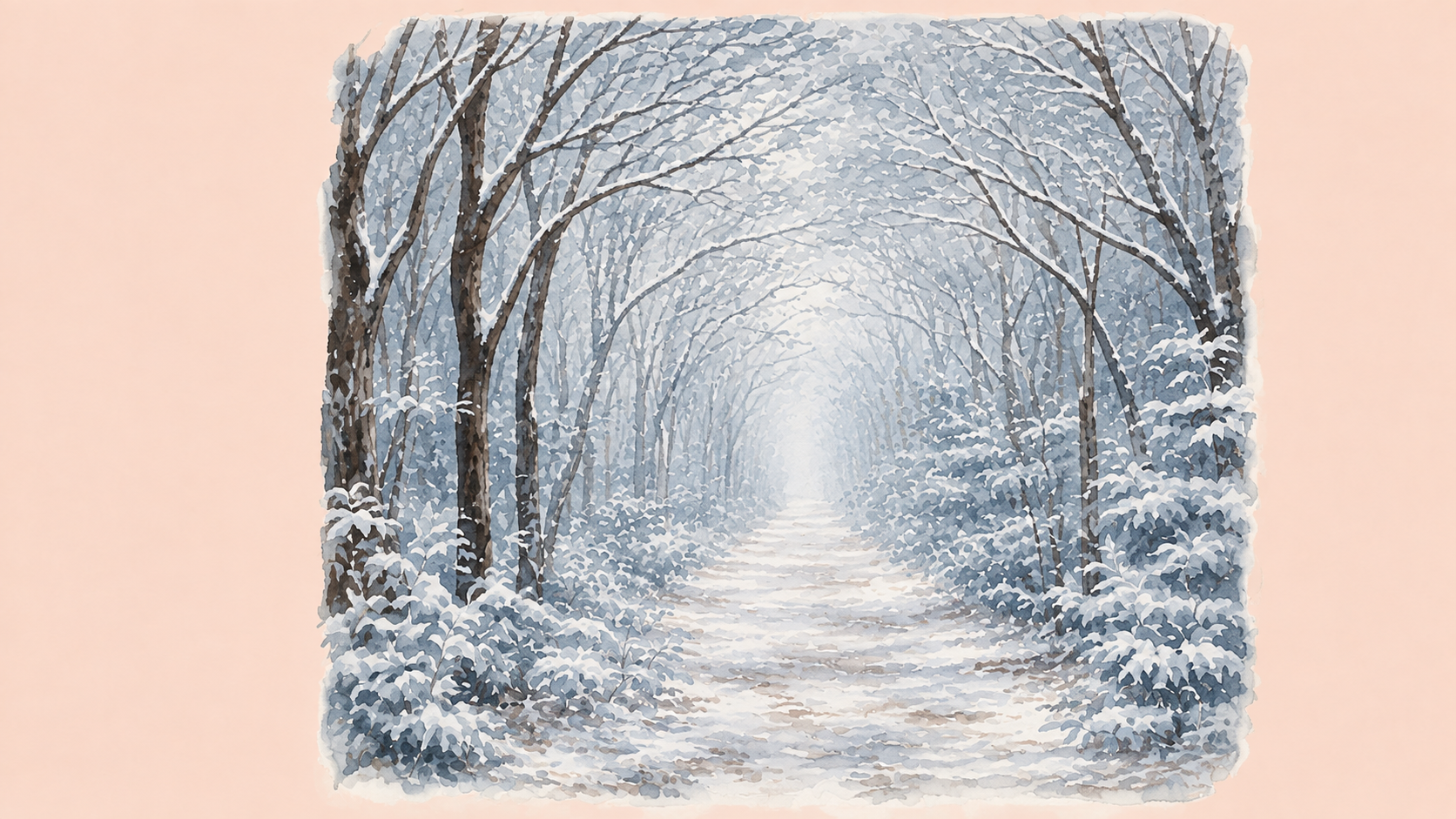
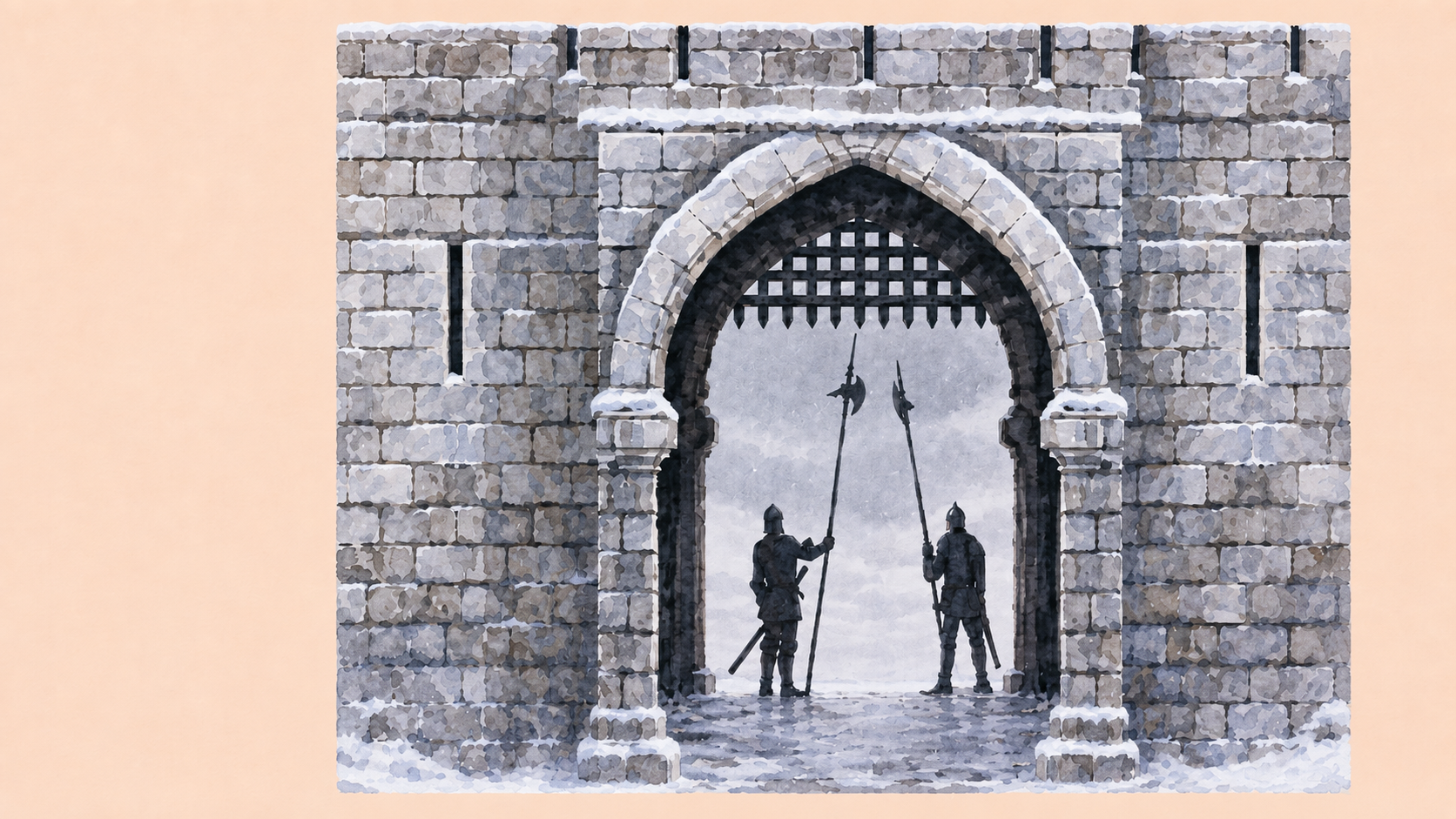
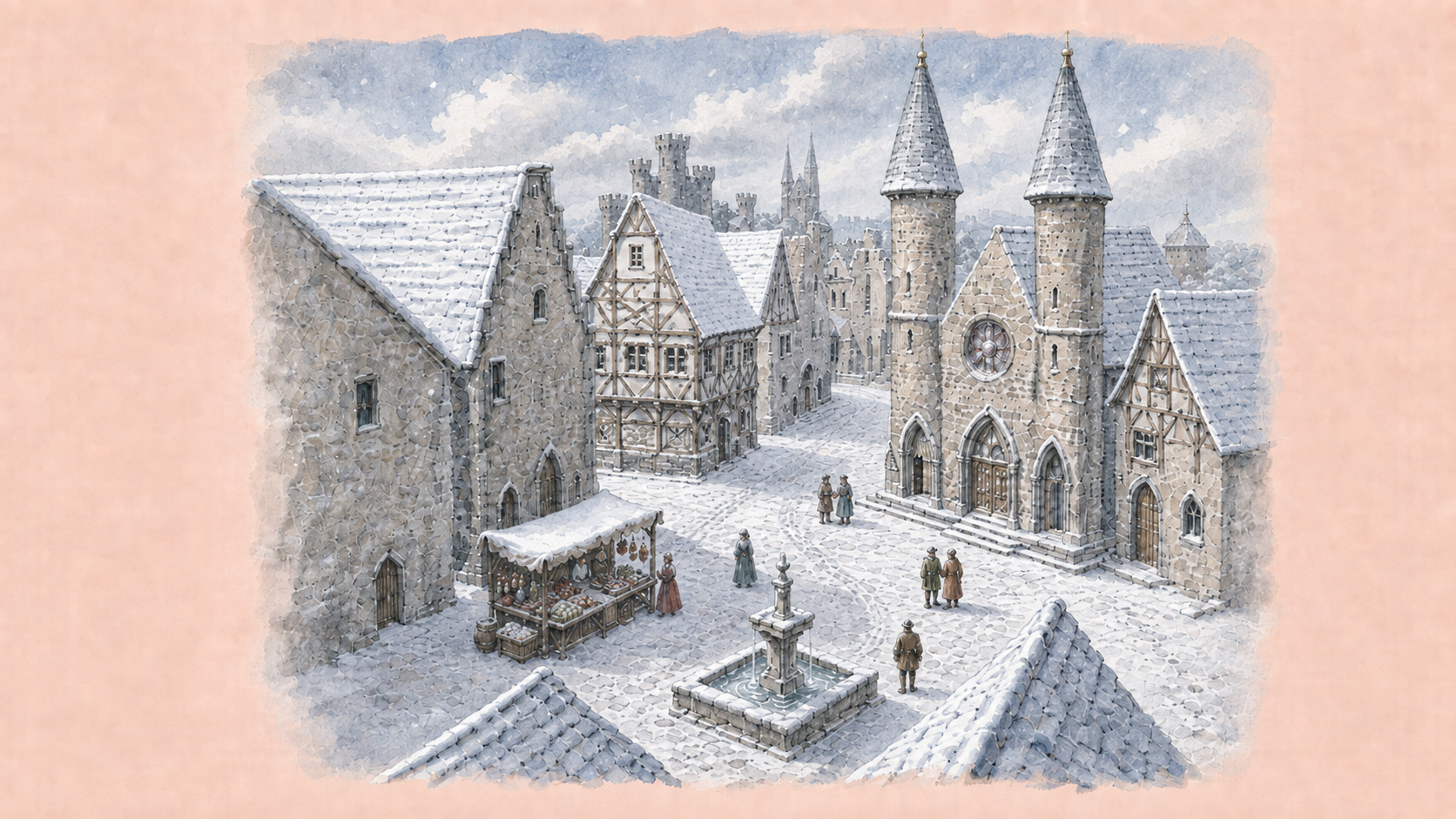
- the restored winter prototype.
These are prototypes that were made in order to have an idea of what a restored high resolution image would look like. Seasonal variations were then applied.
Seven First Experiments
The Docks
Water is one of the hardest fidelity tests. Reflections, rigging, distant buildings and the quiet haze over the harbour all have to gain definition without becoming sharper, cleaner or more photographic than the original painting.
Main Street
Main Street tests a different kind of restraint: long perspective lines, architecture, small figures and street activity. The restored versions must make the scene readable at modern resolutions without turning its deliberately suggested details into a catalogue of newly invented objects.
The Side Street
The side-street picture depends on density and atmosphere more than on any single landmark. Here the challenge is to preserve the original visual rhythm—the balance between people, buildings and open street—while allowing the seasonal weather to change the mood.
The Grove
The grove makes the seasonal idea immediately visible. Leaves, bare branches, ground cover, snow and the colour of the light can change while the composition and the identity of the location remain fixed.
XMS036 - The City Gate
XMS036 provides another useful test of the method. The aim is not to use the low-resolution source as a loose prompt, but as the governing composition: the same view, the same visual hierarchy and the same restrained watercolor treatment.
XTHANKS - The Marketplace
XTHANKS is a good measure of whether added detail remains subordinate to the scene. A restoration succeeds only when the eye still reads the picture in the same order as it did at 320×200.
XTOWN - The City Square
The city square view brings the whole problem together: architecture, landscape, sky, distance and human scale. Each season should feel materially different, yet all three restorations must unmistakably remain the same Darklands picture.
What these prototypes are testing
These images are not a declaration that the visual work is finished. They are tests of a direction.
The most important question is not whether a single enlarged picture looks impressive in isolation. It is whether a complete set can obey the same rules. A restoration pipeline will need consistency in brushwork, architecture, figures, perspective, palette and the amount of recovered detail. It will also need a disciplined review process in which the original picture is always visible beside the proposed restoration.
The seasonal versions add another requirement: the transformations must be credible across many kinds of scene. A winter grove, a winter harbour and a winter city street cannot all be produced by the same superficial effect. Each one has different vegetation, surfaces, weather, reflections and human activity. Yet they must still belong to one coherent visual system.
These prototypes therefore help us define future acceptance questions:
- Does the composition still match the original at a glance?
- Have important silhouettes, objects or relationships moved?
- Has the scene become too sharp, too photographic or too busy?
- Does added detail clarify what was implied, or invent a different place?
- Does the seasonal version change the environment without changing the identity of the scene?
- And the most important of all: Does the complete set still look like Darklands?
A possible future runtime
The implementation itself can remain simple because the game’s original resource identity already provides the key.
MSG owner requests PIC name
        ↓
visual mode selects original or restored family
        ↓
day/night and season select an available variant
        ↓
missing variant falls back to the original PIC
The faithful mode would always use the shipped images. The restored mode could choose seasonal counterparts from the current in-game date. This keeps visual restoration separate from gameplay reconstruction and prevents an artistic experiment from silently becoming part of the historical compatibility layer.
The same structure also leaves room for later work—additional day and night variants, improved restorations, or alternative curated sets—without changing the decoded MSG and state machinery underneath.
More pixels, the same painting
Darklands’ art does not need to be escaped from. Its low resolution conceals detail, but it also contains remarkable composition, colour and atmosphere. The challenge is to reveal more of that work without painting over it.
That is the principle behind these prototypes: preserve the original scene, preserve its watercolor beauty, and let modern resolution serve the painting rather than replace it.
Seasonal variation goes one step further. It uses freedom that the original production did not have, but applies it within the visual language the original artists established. If we eventually introduce it, it will be clearly identified as restored content, built on top of a mode that continues to show Darklands exactly as it was shipped.
More pixels are easy. Keeping the same painting is the real work.